

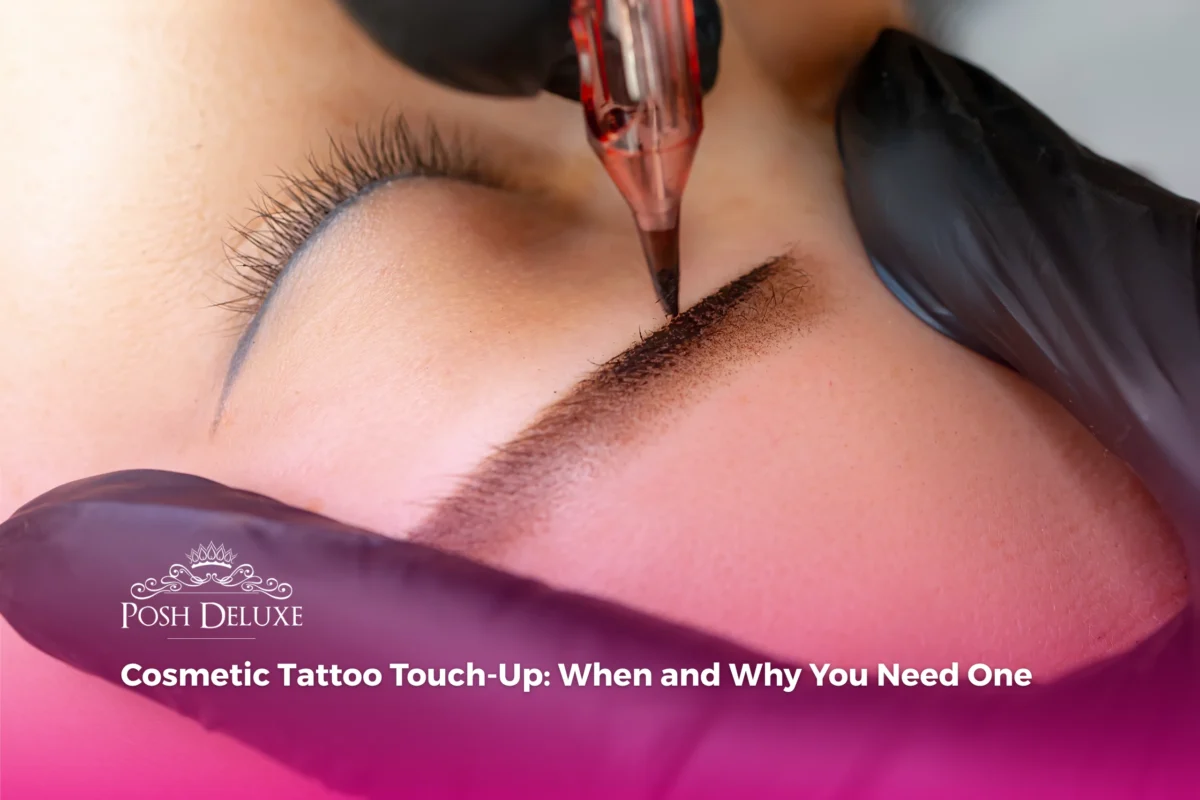
Cosmetic Tattoo Touch-Up: When and Why You Need One
There’s a message we get a lot at Posh Deluxe, usually five or six months after someone’s first brow or lip session.
“Hey, is this normal? My brows look a bit lighter than they did at first.”
Almost always, the answer is yes — it’s completely normal. What’s actually happening is that the client has reached the point where their cosmetic tattoo needs a touch-up, and nobody ever really explained that this was coming.
Here’s the thing about cosmetic tattooing that doesn’t always get said clearly at the first appointment: it was never meant to be a one-and-done. Touch-ups aren’t a sign that something went wrong, and they’re not an upsell. They’re simply part of how the process works, built into the technique itself rather than added on top of it.
If you’ve had brows, lips, or liner done anywhere — not just with us — and you’re staring in the mirror wondering whether what you’re seeing is normal fading or something you should be worried about, this guide walks through exactly what to expect, when to come back in, and why the timing matters more than most people realise.
The Two-Step Process Nobody Explains Upfront
Whether you’ve had microblading, ombré brows, or a lip blush, your first session is only step one. Pigment sits differently in everyone’s skin, and no artist can predict exactly how your skin will hold colour until it’s fully healed. That’s why the perfecting touch-up exists — it’s the second half of the process, not a bonus round.
Skin type plays a huge role here. Someone with dry, normal skin might heal crisp, well-defined strokes that barely need adjusting. Someone with oilier or more textured skin might see strokes blur slightly or colour fade unevenly, simply because of how their skin responds to pigment implantation. Neither outcome means the work was done poorly — it just means different skin heals differently, and the perfecting session is where that gets accounted for.
If nobody mentioned any of this to you before your first appointment, you’re not imagining things. It’s one of the most under-communicated parts of getting cosmetic tattooing done, and it’s a big reason people panic when their colour fades in the first couple of weeks. Once you understand it’s a two-appointment process by design, the whole experience makes a lot more sense.
What’s Actually Happening to Your Skin While It Heals
Before we get into touch-up timing, it helps to understand why the colour changes so much in the first few weeks — because this is where most of the anxiety comes from.
Immediately after your appointment, the pigment sits close to the surface and looks bold, dark, and sometimes a shade or two more intense than what you were expecting. That’s completely intentional. Artists implant colour slightly darker and more saturated than the target shade, because they know a significant amount will be lost as the skin heals.
Over the following one to two weeks, the treated area will typically flake or peel lightly as the skin regenerates. During this stage, colour can look patchy, faint in places, or inconsistent — this is often referred to as the “ghost stage,” and it catches a lot of first-time clients off guard. It looks like the pigment has disappeared. It hasn’t. It’s simply sitting underneath a fresh layer of healing skin that hasn’t fully settled yet.
By the time you’re four to six weeks out, your skin has usually finished the visible part of healing, and the true colour and shape start to show through. This is also roughly when 30 to 50 percent of the original intensity will have faded — again, expected, not a fault.
Throughout this healing window, a few things matter more than people expect:
- Keep SPF on the area every single day once it’s healed. Sun exposure is one of the fastest ways to fade cosmetic tattoo pigment, and this isn’t just a healing-phase rule — it’s a long-term habit if you want your results to last.
- Avoid exfoliants, retinol, AHAs, and BHAs directly over the treated area. These ingredients break down pigment faster than normal skin ageing would.
- Resist the urge to pick at any flaking. Let it come away naturally, or you risk pulling pigment out unevenly.
- Keep your regular skincare routine everywhere else — just steer actives away from the tattooed area itself.
The Perfecting Touch-Up (4–8 Weeks After Your First Session)
Once your skin is fully healed, usually somewhere between four and eight weeks after your original appointment, you’ll come back in for what’s called the perfecting session.
This is the appointment where your artist can finally see the true result. Not the swollen, overly dark version from day one, and not the patchy, faded version from the ghost stage — the actual healed outcome. From there, they can make real decisions: reinforcing any strokes that healed too light, adjusting shape slightly if one side settled differently to the other, or boosting colour in spots that faded more than the rest.
This is also why the perfecting session can’t be rushed forward, even if you’re keen to get things looking “just right” sooner. Nothing meaningful can be assessed or corrected until the skin has finished healing. Going in earlier means working on skin that’s still settling, which can affect how evenly the new pigment takes.
For most people, one perfecting session is enough. If you have oilier skin, a previous tattoo in the same area, or your body simply processes pigment faster, a second session a few months later isn’t unusual — your artist will let you know if that’s likely based on how your first healed result looks.
The Maintenance Touch-Up: How Often, Depending on Your Technique
Once you’re past the perfecting stage, the next touch-up you’ll need is about maintenance rather than correction — and the timing depends quite a bit on which technique you had done.
Microblading tends to fade the fastest of the common techniques, especially on oilier skin, since the fine hair-strokes are implanted more superficially than shaded techniques. Most people find they need a colour refresh somewhere between 12 and 18 months, though it can be sooner on very oily or frequently exfoliated skin.
Ombré or powder brows generally hold their colour a little longer than microblading, often somewhere in the 1 to 3 year range. Because the technique deposits pigment in a soft, shaded pattern rather than fine strokes, it tends to fade more evenly and gradually, which is part of why a lot of clients with oilier skin are steered toward this option over microblading.
Combination brows — microblading and shading done together — usually track somewhere in between, since you’ve got both techniques fading at slightly different rates within the same brow.
Lip blush typically sits in a similar range to microblading, often needing a refresh around the 12 to 18 month mark as the tint softens and the natural lip colour starts to show through more.
A few things will speed up fading regardless of which technique you chose:
- Frequent sun exposure without SPF over the area
- Regular use of retinol, strong exfoliating acids, or chemical peels near the treated area
- Naturally oily or highly textured skin
- Faster skin cell turnover in general, which varies person to person
So think of these timeframes as a general guide based on your technique and skin type, not a fixed countdown. Some people genuinely go two years without needing anything. Others notice fading within ten months. Both are normal — it just comes down to your individual skin.
Signs You’re Overdue for a Touch-Up
You don’t need to count down the months on a calendar to know when it’s time. Your brows or lips will usually tell you first. Keep an eye out for:
- Colour shifting warm, orange, or ashy instead of staying true to your original shade — this is one of the more noticeable signs, especially with brows
- Softened definition, where the shape looks less crisp or structured than it did when it was fresh
- Reaching for brow pencil or lip liner again to fill in what’s faded, especially if you’d stopped needing them entirely after your original appointment
- Uneven fading, where one section or side has faded noticeably more than the rest, rather than the whole area softening together
- The overall shape looking “smaller” than it used to, particularly with brows, as the outer edges of strokes or shading fade first
If any of that sounds familiar, it’s a good sign to book in rather than wait it out and see if it gets more obvious.
Why “Little and Often” Beats Waiting It Out
It’s tempting to put off a touch-up, especially if the fading isn’t dramatic yet and life is busy. But timing genuinely changes the outcome, and not in a small way.
A touch-up booked while there’s still a reasonable amount of pigment left in your skin tends to be a lighter, quicker session. Your artist has an existing colour and shape to work from, so it’s really more of a refresh than a rebuild — often shorter in the chair, and gentler on the skin since less new pigment needs to be implanted to get you back to full colour.
Wait too long, and there’s often very little pigment left to reference. At that point, what should have been a routine top-up can start to look a lot more like starting from scratch — closer to your original session in terms of time, discomfort, and sometimes pricing, since your artist is essentially rebuilding rather than refreshing. Some studios will also price a “correction” session differently to a standard maintenance touch-up, precisely because of how much more work is involved.
There’s also a skin health angle worth mentioning. Repeatedly over-tattooing an area that’s gone too long between touch-ups, or having correction work done too frequently, can eventually lead to a build-up of scar tissue or oversaturated pigment that’s harder to work with long term. Staying on a sensible touch-up schedule isn’t just about keeping your colour looking fresh — it’s kinder to your skin over time as well.
What Actually Happens During a Touch-Up Appointment
A touch-up appointment follows a similar structure to your original session, just shorter and more targeted. It typically starts with your artist assessing the current state of your brows or lips — how much colour is left, whether the shape has held or shifted, and which areas need attention.
From there, numbing cream is applied the same way it was for your first appointment, so discomfort levels are usually comparable, if not slightly milder since you’re not creating an entirely new tattoo. Your artist will then go back over faded strokes or shading, reinforce colour where it’s needed, and make any small shape adjustments if one area has faded unevenly compared to the rest.
Depending on how much work is involved, a touch-up appointment tends to run shorter than the original — often somewhere in the range of an hour to ninety minutes, compared to two to three hours for a full first session. Aftercare afterward is the same as it was the first time around: keep the area clean, avoid picking at any flaking, stay out of direct sun, and steer actives like retinol away from it while it heals.
A Note on Cost
Touch-up pricing varies from studio to studio, and it often depends on how much time has passed and how much work is genuinely needed. A perfecting session booked within the standard four-to-eight week window is frequently included in the cost of your original appointment, since it’s considered part of the full service rather than an extra.
Maintenance touch-ups further down the track are usually priced separately, and reasonably — since less pigment and time are typically needed compared to a full session. Where costs tend to climb is with correction work on tattoos that have faded significantly or gone a long time without any upkeep, simply because there’s more rebuilding involved. If you’re ever unsure where you sit, it’s worth asking for a quick assessment before assuming the worst on price.
Choosing Where to Get Your Touch-Up Done
If it’s been a while since your original session, it’s worth knowing that not every studio will take on touch-up work for tattooing they didn’t originally do — and that’s a reasonable policy, not a red flag. Working on someone else’s existing pigment means assessing what’s already there, figuring out the original technique, and colour-matching to something you didn’t create, which takes more care than refreshing your own work.
If you’re coming to a new artist for a touch-up on older tattooing, be upfront about when it was done, roughly how it’s faded, and whether it’s had any touch-ups since. A quick consultation photo beforehand can save time and help your artist plan the session properly rather than working it out on the day.
Frequently Asked Questions
If it’s been less than eight weeks since your very first cosmetic tattoo appointment, what you need is your perfecting session — this is standard and expected, not a sign anything went wrong. If it’s been closer to a year or more and your colour has genuinely faded from where it settled after healing, that’s a maintenance touch-up.
Yes. Losing 30 to 50 percent of the initial colour intensity during the first two to four weeks is completely normal and expected as your skin heals. This is why the perfecting session exists — nothing is finalised until your skin has fully settled.
You can, though most artists still recommend the perfecting session even if you’re happy, since it’s your best chance to lock in even colour and correct any small unevenness before it becomes a bigger gap later. Maintenance touch-ups further down the track are genuinely optional — it comes down to how much fading you’re comfortable with before refreshing.
Most clients describe touch-ups as similar to or slightly more comfortable than the original session, since you’re often working on skin with existing pigment rather than fresh skin, and numbing is applied the same way.
The longer you wait, the less pigment your artist has to work from, which can mean a longer session, more product used, and in some cases a different pricing structure since the work starts to resemble a correction rather than a simple refresh.
Yes, though it’s worth checking the studio’s policy first, since working on someone else’s previous tattoo involves extra assessment. Bring photos of how it originally looked if you can, and be honest about the timeline since your last session.
Booking Your Touch-Up at Posh Deluxe
If it’s been a while since your last brow or lip appointment and you’re noticing any of the signs above, we’d rather see you sooner than later. Get in touch with our team and we’ll take a look at where your colour and shape are currently sitting, and let you know exactly what kind of session makes sense for you — whether that’s a straightforward refresh or something a little more involved.
📍 Book your cosmetic tattoo touch-up with Posh Deluxe Salon in Mount Pleasant, Perth.
Phone: 08 9222 7500
Hours: Mon–Wed, Fri–Sat 9 AM – 5 PM (by appointment only)