

Why Do Cosmetic Tattoo Brows Change Colour? (Grey, Pink, Orange)
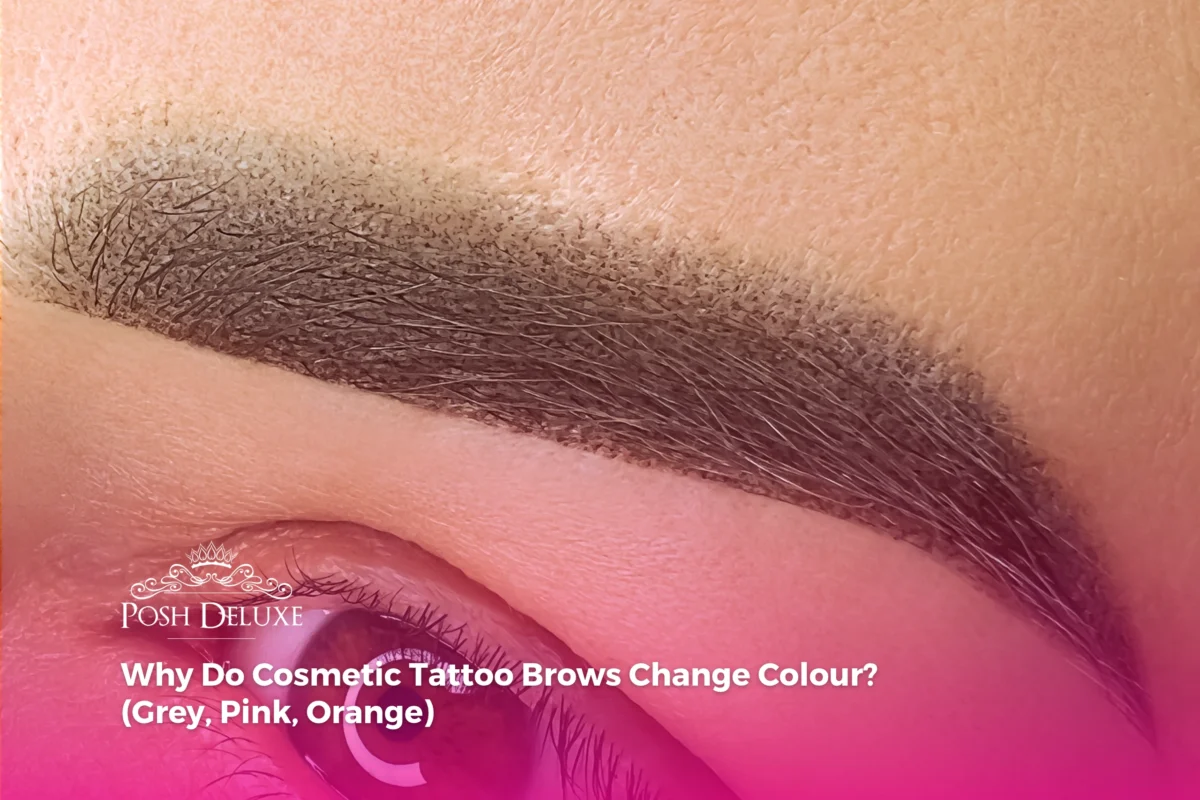
You left the salon with beautifully defined brows. A few weeks or months later, you glance in the mirror and they look different. Maybe they’ve gone a bit grey, a bit pink, or warmer and more orange than you remember.
First, don’t panic. Some colour change is a normal part of healing, and some is a sign that your brows need a refresh or a small adjustment. This guide explains which is which, why each colour shift happens, and what you can do about it.
First, Check What Stage You’re In
The most common cause of worry is simply timing. Cosmetic tattoo brows look very different at different stages, and the early weeks aren’t a reliable guide to your final colour.
- Days 1 to 7: Brows look bold and noticeably darker than the finished result. Our ombre brows and nano brows comparison puts this at roughly 30 to 50 per cent darker than the final shade.
- Around days 8 to 14: The “ghost phase.” Colour can look patchy, faint or like it’s disappeared. It hasn’t. It’s sitting beneath a fresh layer of healing skin.
- Weeks 3 to 6: The true colour emerges as the skin settles. Combination brows and lip blush usually take around 4 to 6 weeks for the colour to fully settle.
Losing a large share of the initial intensity in the first few weeks is normal. Please don’t judge your result until the healing window has finished. For the full day-by-day picture, see our ombre brow healing timeline.
Why Cosmetic Tattoo Brows Change Colour
Once healing is done, any colour change comes down to a handful of causes. Several of them work together.
1. Your skin undertone and the pigment
Undertone is the colour beneath your skin’s surface, and it interacts with the pigment placed in it. When they’re well matched, the result looks balanced. When they aren’t, the healed colour can drift:
- A warm undertone with a cool pigment can heal grey, ashy or muddy.
- A cool undertone with a warm pigment can heal too red, orange or pink.
This is why colour selection is one of the most important parts of a cosmetic tattoo, and why we assess undertone before choosing a shade. Our guide to choosing the right pigment colour covers this in detail.
2. Pigments fade at different rates
Cosmetic tattoo pigment is usually a mix of colour components, and those components don’t all break down at the same speed. As the stronger parts of the mix fade first, a different tone can be left behind. That’s often why a brow that started a soft brown gradually reads as warmer or more orange over time. Our comparison of ombre, nano and microblading notes that microblading in particular can fade patchy or slightly warm on some skin types, while ombre tends to fade more softly and evenly.
3. How the skin filters the pigment
Pigment sits beneath the surface of the skin, so you’re always seeing it through a layer of skin. This can make some pigments look cooler, bluer or greyer than they did on the day, particularly as the surface skin renews and as the colour lightens.
4. Sun exposure
UV light is one of the biggest drivers of fading and colour shift. Brows are exposed to the sun every day, so they tend to fade a little faster than some other areas. Sun can lighten the pigment and expose whatever undertone is left behind. In Perth’s climate, this matters. Our guide to protecting your results through a Perth summer has practical tips.
5. Skin type
Oily skin tends to lighten pigment faster, while normal and dry skin often retain colour longer. If your skin is oily, you may see colour softening and shifting sooner than a friend with the same treatment. See how long cosmetic tattoo lasts for what to expect by area.
6. Skincare and other treatments
Certain skincare products and professional treatments can affect the appearance and longevity of cosmetic tattoo pigment.
Exfoliating ingredients such as retinol and glycolic acid, along with chemical peels and other resurfacing treatments, may contribute to faster fading when used around the treated area
What Each Colour Usually Means
| What you’re seeing | The likely cause | What to do |
| Very dark, bold brows in week one | Normal healing | Follow aftercare and wait |
| Patchy or almost gone at 1 to 2 weeks | The ghost phase | Wait until healing is complete |
| Slightly pink or red in the first days | Healing redness | It usually settles quickly |
| Still pink or red after healing | Pigment too warm for your undertone | Mention it at your perfecting session |
| Grey or ashy after healing | A cool pigment on a warm undertone, or sun fading | Ask about a colour adjustment |
| Orange or warm months later | Warmer pigment components outlasting the rest, plus sun and exfoliants | Book a colour boost and ask about a colour adjustment |
| Colour changed after laser, IPL or a peel | Treatment effect on the pigment | Tell your artist before booking anything else |
| Sore, swollen, hot, or discharging | Not a colour issue | See your GP |
Treat this table as a guide only. It’s hard to assess colour from a photo or from memory, and your artist can only judge it in person.
Can Colour Changes Be Fixed?
In most cases, yes. A shift that’s noticeable but not dramatic is usually dealt with at a perfecting session or colour boost. Our pigment guide notes that colour boost appointments are a chance to refine, deepen or slightly shift your shade.
Your artist may suggest a colour adjustment, which means choosing a pigment that offsets the tone you don’t like, for example a cooler shade to tone down orange or a warmer one to soften grey. The exact approach depends on your skin, how much pigment remains, and what you’d like the final result to look like. [NOTE: confirm how Posh Deluxe approaches colour correction, and whether any adjustment is included in a perfecting session or charged as a colour boost.]
Some practical steps while you wait:
- Check your colour in natural daylight. Indoor lighting can make brows look warmer or cooler than they are.
- Compare against your healed colour, not day one. The first week isn’t a fair benchmark.
- Take dated photos. Photos in the same light help your artist see how the colour has changed over time.
- Cover it temporarily if you need to. A brow powder or pencil in a suitable shade can mask a tone you’re unhappy with until you can book in.
- Avoid DIY fixes. Please don’t try to scrub, exfoliate or peel your brows to lighten the colour. It can damage the skin and make the result less predictable.
If your brows were done somewhere else and you’re unhappy with the colour, we’re happy to assess them at a consultation.
How to Reduce the Chance of an Unwanted Colour Shift
You can’t control everything, but you can improve your odds:
- Choose a PMU artist who assesses your undertone, rather than picking a colour from a chart.
- Tell your artist about your skin, your brow and hair colour, and any treatments you use. The more they know, the better the match.
- Avoid fresh tans. Sun-darkened or spray-tanned skin can throw off colour matching. Our pre-care guide covers what to avoid beforehand.
- Protect your brows from the sun with SPF once they’ve fully healed.
- Go easy on exfoliating products near your brows.
- Book your colour boost before the colour has completely gone, instead of waiting until it’s faded.
If you also tint your brow hairs, keep in mind that tinting can change how the whole brow reads. Our guide to brow lamination and tint explains the difference. The same colour principles apply to lip blush and eyeliner tattoo, which are covered in our pigment colour guide.
When to Book a Touch-Up
If your brows have healed fully and the colour has drifted, softened or lost definition, it’s usually time for a colour boost. Our guide on cosmetic tattoo touch-ups lists the signs that it’s time. Most clients refresh somewhere between 12 and 24 months after their treatment, depending on their skin and the technique. [NOTE: your live posts give different refresh windows (12 to 18, 12 to 24, and 18 to 24 months). Confirm the range you want to use here.]
Frequently Asked Questions
Grey or ashy tones usually come from a cool pigment sitting on a warm undertone, or from sun fading that leaves a cooler tone behind. It’s often correctable with a colour adjustment at a perfecting session or colour boost.
Warmer components of the pigment can outlast the rest as the colour fades, especially with sun exposure and exfoliating skincare. A cool undertone with a warm pigment can also heal too red or orange.
Some pinkness in the first few days is normal healing redness. If a pink or red tone remains after healing, the pigment may be too warm for your undertone, which is worth raising at your perfecting session.
Yes. It’s normal for brows to look noticeably lighter than they did in the first week, and to lose a large share of the initial intensity in the first two to four weeks.
Wait until healing is complete, which is around 4 to 6 weeks for most clients. The ghost phase and early flaking can make brows look much lighter than they will end up.
Yes. UV exposure lightens pigment over time and can leave a warmer or cooler tone behind. SPF on healed brows helps.
Oily skin tends to lighten pigment faster, and underlying skin undertone affects how the healed colour looks. It varies from person to person.
In most cases, yes, through a colour boost or perfecting session with an adjusted pigment. Your artist will assess what’s possible in person.
Colour change on its own isn’t a sign of infection. But if your brows are painful, hot, swollen, weeping or you feel unwell, see your GP promptly.
Book a Brow Colour Check in Perth
If your cosmetic tattoo brows have changed colour and you’re not sure whether it’s normal, the simplest next step is to have us look at them. Our PMU team at Posh Deluxe Salon in Mount Pleasant can tell you whether you’re in the normal healing window or whether a colour adjustment would help.
Get in touch with us or book online to arrange a consultation.